- Index of Books 180347
-
-
Book Categories
-
Activities89
Children's Literature1978
Drama916 Education341 Essays & Profiles1360 Fiction1569 Health104 History3266Humorous592 Journalism200 Language & Literature1680 Letters727
Life Style30 Medicine969 Movements268 Novel4264 Political350 Religions4763Research & Criticism6485Short-story2661 Sketches233 Social issues109 Sufism / Mystic2007Text Books424 Translation4199Women's writings5756-
Book Categories
- Bait Bazi14
- Catalogue / Index4
- Couplets68
- Deewan1250
- Doha49
- Epics100
- Exegesis181
- Geet63
- Ghazal1256
- Haiku11
- Hamd56
- Humorous31
- Intikhab1578
- Keh mukarni6
- Kulliyat571
- Mahiya20
- Majmua4864
- Marsiya387
- Masnavi737
- Musaddas44
- Naat587
- Nazm1200
- Others84
- Paheli14
- Qasida177
- Qawwali16
- Qit'a67
- Quatrain263
- Quintuple15
- Rekhti12
- Remainders16
- Salaam34
- Sehra12
- shahr-Ashob, Hajw, Zatal Nama17
- Tareekh-Goi25
- Translation74
- Wasokht24
Profile of Imam Mohammad Ghazali
Identity: Great Islamic thinker, jurist, theologian, mystic, Mujaddid, philosopher, and Hujjat al-Islam
Imam Abu Hamid Muhammad bin Muhammad al-Ghazali, widely known as Imam Ghazali, is regarded as one of the greatest intellectual and spiritual figures in Islamic history. His personal name was Muhammad, his kunya Abu Hamid, and his honorific title Zayn al-Din. In the Muslim world, he is remembered with the distinguished title Hujjat al-Islam. He was born in 450 AH in Tus (Khurasan province, present-day Iran).
He received his early education in Tus and later traveled to Nishapur, where he studied jurisprudence, principles of jurisprudence, and theology under the renowned scholar Imam al-Haramayn Abd al-Malik al-Juwayni. Within a short period, he demonstrated extraordinary intellectual ability and gained prominence in scholarly debates and discussions.
From Nishapur, he reached the court of the Seljuk vizier Nizam al-Mulk Tusi and in 484 AH was appointed as a professor at the Nizamiyya Madrasa of Baghdad. During this period, he wrote several scholarly works in refutation of the Batiniyya, Ismailis, and other sects. His deep engagement with philosophy led him to a severe intellectual crisis, during which rational sciences temporarily dominated his thought.
When outward knowledge alone failed to bring inner peace, he turned toward Sufism. In 488 AH, he left Baghdad in search of truth, traveled through various regions, lived in seclusion in Syria for some time, and later performed Hajj. These spiritual and intellectual experiences are reflected in his famous work Al-Munqidh min al-Dalal. At this stage, he brought Ash‘ari theology to intellectual maturity and firmly established a balanced synthesis of reason and revelation.
In his final years, Imam Ghazali returned to Tus, where he devoted himself to worship, writing, and the moral reform of the Muslim community. There are differing views regarding the number of his works: some estimate around 200, while others suggest more than 400. According to one Egyptian scholar, 457 works are attributed to him, of which the first 72 are considered authentic. His most renowned books include Ihya’ Ulum al-Din, Tahafut al-Falasifa, Kimya-yi Sa‘adat, Mukashafat al-Qulub, and Al-Munqidh min al-Dalal.
According to Imam al-Dhahabi, Imam Ghazali was the unique scholar of his age, exceptionally intelligent, and a prolific author who attained mastery in jurisprudence, theology, and dialectical reasoning.
Death: Imam Ghazali passed away on 14 Jumada al-Thani 505 AH / 19 December 1111 CE in Tus.
USEFUL LINKS : | https://en.wikipedia.org/wiki/Al-Ghazali
join rekhta family!
-
Activities89
Children's Literature1978
-
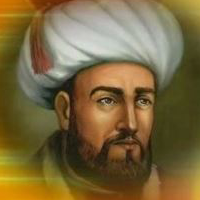
Islamic thinker and philosopher, theologian, popularly known as 'Hujjat al-Islam'
Islamic thinker and philosopher, theologian, popularly known as 'Hujjat al-Islam'