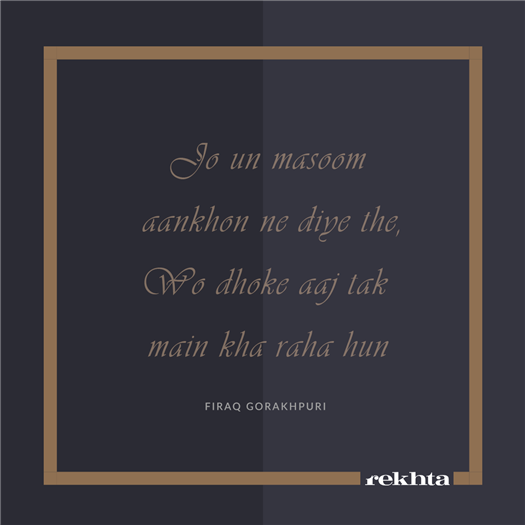
Font by Mehr Nastaliq Web

aaj ik aur baras biit gayā us ke baġhair

jis ke hote hue hote the zamāne mere

CANCEL DOWNLOAD SHER
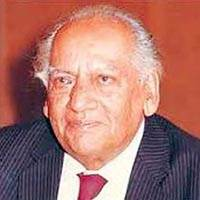
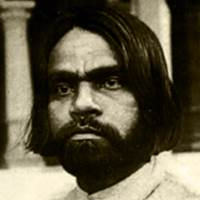
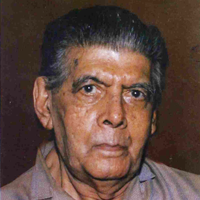
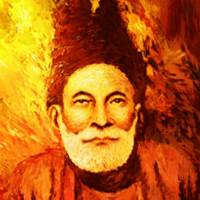
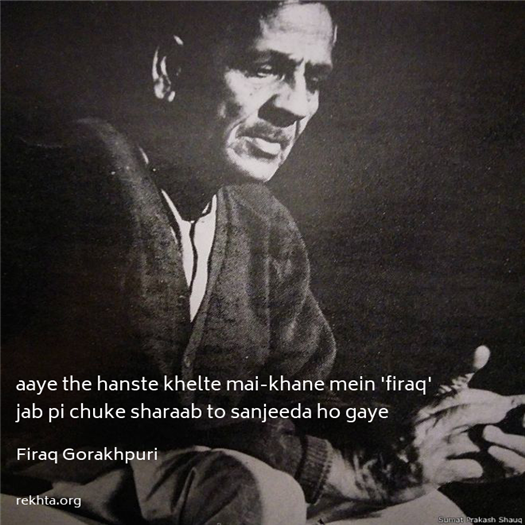
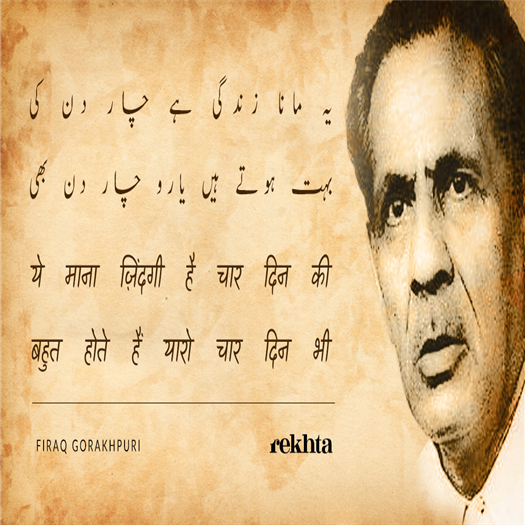
Firaq Gorakhpuri's Photo'

Firaq Gorakhpuri

1896 - 1982 | Allahabad, India

One of the most influential pre-modern poets who paved the way for the modern Urdu ghazal. Known for his perceptive critical comments. Recipient of the Gyanpeeth Award.

One of the most influential pre-modern poets who paved the way for the modern Urdu ghazal. Known for his perceptive critical comments. Recipient of the Gyanpeeth Award.

Firaq Gorakhpuri

Ghazal 75

Nazm 8

Sher-o-Shayari 182

laa.ī na aisoñ-vaisoñ ko ḳhātir meñ aaj tak

ūñchī hai kis qadar tirī nīchī nigāh bhī

Interpretation: Rekhta AI

The speaker says they have never given importance to “such-and-such” ordinary people, but then turns the point toward the beloved/addressee: even when you look down, that very act reveals your high pride and elevated self-image. The couplet hinges on irony—“low” (demeaning) gaze becomes proof of “high” (superior) stature. Emotionally it mixes complaint, admiration, and sharp sarcasm at the beloved’s disdain.

lai na aison-waison ko KHatir mein aaj tak

unchi hai kis qadar teri nichi nigah bhi

Interpretation: Rekhta AI

The speaker says they have never given importance to “such-and-such” ordinary people, but then turns the point toward the beloved/addressee: even when you look down, that very act reveals your high pride and elevated self-image. The couplet hinges on irony—“low” (demeaning) gaze becomes proof of “high” (superior) stature. Emotionally it mixes complaint, admiration, and sharp sarcasm at the beloved’s disdain.

  • Share this

mire dil se kabhī ġhāfil na hoñ ḳhuddām-e-mai-ḳhāna

ye rind-e-lā-ubālī be-piye bhī to bahaktā hai

Interpretation: Rekhta AI

The speaker addresses the tavern’s servants as if they are caretakers of his inner state, pleading that they keep watch over his heart. The “rind” (bohemian drinker) is so naturally unsteady that even without wine he “reels”—a metaphor for love’s intoxication, emotional fragility, and constant restlessness. The tavern becomes a symbol of a place where this wounded, craving heart is managed and soothed.

mere dil se kabhi ghafil na hon KHuddam-e-mai-KHana

ye rind-e-la-ubaali be-piye bhi to bahakta hai

Interpretation: Rekhta AI

The speaker addresses the tavern’s servants as if they are caretakers of his inner state, pleading that they keep watch over his heart. The “rind” (bohemian drinker) is so naturally unsteady that even without wine he “reels”—a metaphor for love’s intoxication, emotional fragility, and constant restlessness. The tavern becomes a symbol of a place where this wounded, craving heart is managed and soothed.

  • Share this

samajhnā kam na ham ahl-e-zamīñ ko

utarte haiñ sahīfe āsmāñ se

Interpretation: Rekhta AI

The speaker asserts human dignity: though we live on earth, we are not insignificant. The metaphor of “scriptures descending” suggests divine attention and guidance given to humanity. It rebukes arrogance that looks down on earthly people, and replaces it with awe at the human capacity to receive truth. The emotional core is self-respect grounded in a higher, sacred connection.

samajhna kam na hum ahl-e-zamin ko

utarte hain sahife aasman se

Interpretation: Rekhta AI

The speaker asserts human dignity: though we live on earth, we are not insignificant. The metaphor of “scriptures descending” suggests divine attention and guidance given to humanity. It rebukes arrogance that looks down on earthly people, and replaces it with awe at the human capacity to receive truth. The emotional core is self-respect grounded in a higher, sacred connection.

  • Share this

tirā 'firāq' to us din tirā firāq huā

jab un se pyaar kiyā maiñ ne jin se pyaar nahīñ

Interpretation: Rekhta AI

The couplet says the beloved’s “firaq” (separation) is not just physical distance; it begins when the speaker betrays sincerity. By loving where there is no real love, he cuts himself off from true love and triggers an inner exile. The pain is moral and emotional—born from falseness, guilt, and the loss of authenticity.

tera 'firaq' to us din tera firaq hua

jab un se pyar kiya main ne jin se pyar nahin

Interpretation: Rekhta AI

The couplet says the beloved’s “firaq” (separation) is not just physical distance; it begins when the speaker betrays sincerity. By loving where there is no real love, he cuts himself off from true love and triggers an inner exile. The pain is moral and emotional—born from falseness, guilt, and the loss of authenticity.

  • Share this

vo kuchh rūThī huī āvāz meñ tajdīd-e-dildārī

nahīñ bhūlā tirā vo iltifāt-e-sar-girāñ ab tak

Interpretation: Rekhta AI

The couplet holds the paradox of love: even in sulking and pride, the beloved reaches out. “Renewal of heart-bond” suggests reconciliation, while the “heavy-headed” (proud, reluctant) courtesy implies kindness offered with restraint. The speaker cherishes that small, dignified softening as a lasting proof of care.

wo kuchh ruThi hui aawaz mein tajdid-e-dildari

nahin bhula tera wo iltifat-e-sar-giran ab tak

Interpretation: Rekhta AI

The couplet holds the paradox of love: even in sulking and pride, the beloved reaches out. “Renewal of heart-bond” suggests reconciliation, while the “heavy-headed” (proud, reluctant) courtesy implies kindness offered with restraint. The speaker cherishes that small, dignified softening as a lasting proof of care.

  • Share this

Quote 26

Ghazal wo baansuri hai jise zindagi ki halchal mein humne kaheen kho diya tha aur jise ghazal ka shaa'ir kaheen se phir se dhoondh laata hai aur jiski lay sun kar Bhagwaan ki aankhon mein bhi insaan ke liye muhabbat ke aansoo aa jaate hain.

Ghazal wo baansuri hai jise zindagi ki halchal mein humne kaheen kho diya tha aur jise ghazal ka shaa'ir kaheen se phir se dhoondh laata hai aur jiski lay sun kar Bhagwaan ki aankhon mein bhi insaan ke liye muhabbat ke aansoo aa jaate hain.

  • Share this

Soz-o-gudaaz mein jab pukhtagi aa jaati hai to ghum, ghum nahi rahta balki eik roohaani sanjeedagi mein badal jaata hai.

Soz-o-gudaaz mein jab pukhtagi aa jaati hai to ghum, ghum nahi rahta balki eik roohaani sanjeedagi mein badal jaata hai.

  • Share this

Qaum aur qaumi zindagi mit rahi hai aur hum hain ki Hindi, Hindi aur Urdu, Urdu kiye ja rahe hain.

Qaum aur qaumi zindagi mit rahi hai aur hum hain ki Hindi, Hindi aur Urdu, Urdu kiye ja rahe hain.

  • Share this

Maujooda tamaddun ke mutaalbe aise hain ki humein Roman rasm-ul-khat ko apnaana padega.

Maujooda tamaddun ke mutaalbe aise hain ki humein Roman rasm-ul-khat ko apnaana padega.

  • Share this

Shaa'iri ka maqsad hum jo kuch bhi samjhen uska haqeeqi maqsad buland-tareen wijdaani kaifiyat aur jamaaliyaati shu'oor paida karne ke alaawa kuch nahi.

Shaa'iri ka maqsad hum jo kuch bhi samjhen uska haqeeqi maqsad buland-tareen wijdaani kaifiyat aur jamaaliyaati shu'oor paida karne ke alaawa kuch nahi.

  • Share this

Rubai 66

Qisse 21

Article 13

BOOKS 88

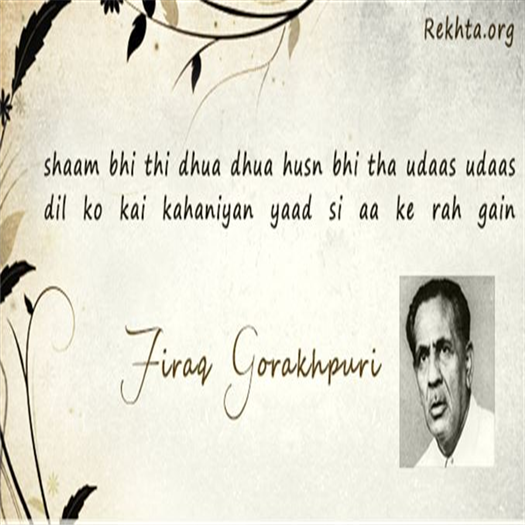
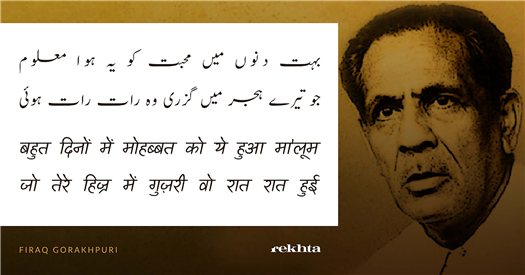
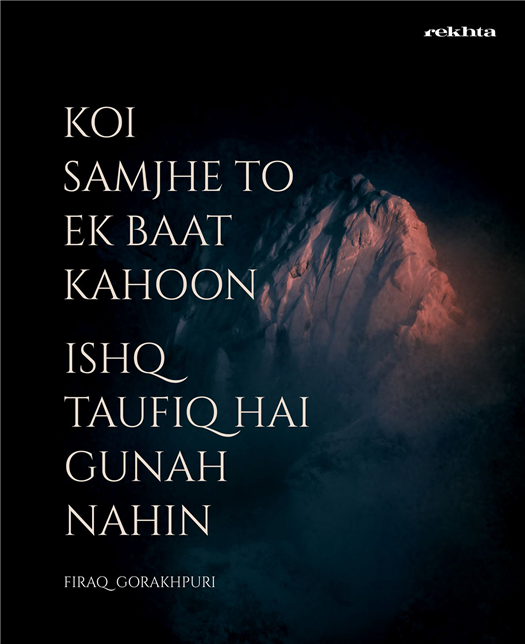
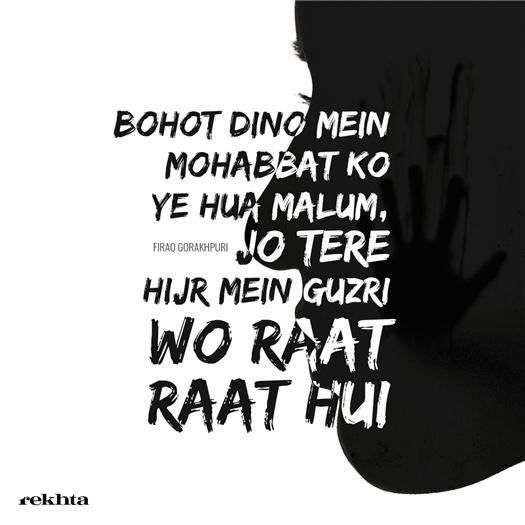
Image Shayari 21

Videos 36

This video is playing from YouTube

Audios 26

'firaaq' ik na.ii suurat nikal to saktii hai

hijr-o-visaal-e-yaar kaa parda uThaa diyaa

jaur-o-be-mehrii-e-iGmaaz pe kyaa rotaa hai

Recitation

Scholar 6


RELATED Blog


RELATED publishers

More publishers From "Allahabad"

Recitation

Speak Now