- Index of Books 179775
-
-
Book Categories
-
Activities76
Children's Literature1991
Drama928 Education345 Essays & Profiles1393 Fiction1604 Health105 History3316Humorous613 Journalism202 Language & Literature1727 Letters746
Life Style30 Medicine977 Movements277 Novel4313 Political356 Religions4765Research & Criticism6668Short-story2704 Sketches249 Social issues111 Sufism / Mystic2056Text Books466 Translation4304Women's writings5898-
Book Categories
- Bait Bazi14
- Catalogue / Index4
- Couplets68
- Deewan1305
- Doha48
- Epics101
- Exegesis182
- Geet64
- Ghazal1259
- Haiku12
- Hamd50
- Humorous33
- Intikhab1612
- Keh mukarni7
- Kulliyat585
- Mahiya20
- Majmua4865
- Marsiya388
- Masnavi774
- Musaddas41
- Naat578
- Nazm1194
- Others82
- Paheli15
- Qasida186
- Qawwali17
- Qit'a68
- Quatrain274
- Quintuple16
- Rekhti12
- Remainders17
- Salaam32
- Sehra12
- shahr-Ashob, Hajw, Zatal Nama18
- Tareekh-Goi27
- Translation68
- Wasokht26
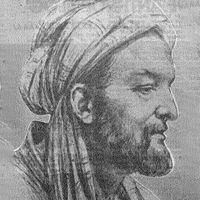
Profile of Abu Ali Sina
Abu ʿAlī al-Ḥusayn ibn ʿAbd Allāh ibn Sīnā — known in the West as Avicenna and honored with the title “al-Shaykh al-Raʾīs” (the Master and Leader) — stands among the greatest thinkers of Islam and one of the most influential philosophers and physicians of the medieval world. A true polymath, Ibn Sīnā is believed to have written about 450 works, of which approximately 240 have survived. Among these, nearly 150 treat philosophy and about 40 focus on medicine.
His two most celebrated masterpieces are al-Shifāʾ and al-Qānūn fī al-Ṭibb:
Kitāb al-Shifāʾ (The Book of Healing) is a monumental philosophical and scientific encyclopedia covering logic, natural sciences, mathematics, and metaphysics.
al-Qānūn fī al-Ṭibb (The Canon of Medicine) is a comprehensive medical encyclopedia that became a standard textbook in Islamic and European universities and medical schools well into the seventeenth century. This work was translated into Latin and several other languages, shaping the foundations of medical education for centuries. In 1973, the Canon of Medicine was republished in New York, attesting to its enduring significance.
Ibn Sīnā’s intellectual pursuits extended far beyond philosophy and medicine. He also wrote on astronomy, alchemy, geography, geology, psychology, Islamic theology, logic, mathematics, physics, and poetry, earning him the epithet “the Sun of the Medical World.” His writings not only synthesized earlier Greek and Islamic knowledge but also laid the groundwork for new directions in science and thought, influencing scholars in both the Islamic East and medieval Europe.
Through the breadth and depth of his scholarship, Ibn Sīnā stands as one of the towering figures of the global intellectual heritage — a beacon whose works bridged civilizations and shaped the development of science and philosophy for generations.
USEFUL LINKS : | https://en.wikipedia.org/wiki/Avicenna
Tagged Under
join rekhta family!
-
Activities76
Children's Literature1991
-