- Index of Books 182645
-
-
Book Categories
-
Activities85
Children's Literature1987
Drama925 Education344 Essays & Profiles1392 Fiction1600 Health105 History3292Humorous611 Journalism202 Language & Literature1710 Letters746
Life Style30 Medicine983 Movements272 Novel4317 Political354 Religions4756Research & Criticism6623Short-story2690 Sketches245 Social issues109 Sufism / Mystic2040Text Books450 Translation4251Women's writings5826-
Book Categories
- Bait Bazi14
- Catalogue / Index4
- Couplets68
- Deewan1284
- Doha48
- Epics101
- Exegesis181
- Geet63
- Ghazal1262
- Haiku11
- Hamd56
- Humorous31
- Intikhab1602
- Keh mukarni7
- Kulliyat585
- Mahiya20
- Majmua4879
- Marsiya387
- Masnavi748
- Musaddas44
- Naat585
- Nazm1209
- Others82
- Paheli15
- Qasida182
- Qawwali17
- Qit'a68
- Quatrain272
- Quintuple15
- Rekhti12
- Remainders17
- Salaam34
- Sehra12
- shahr-Ashob, Hajw, Zatal Nama17
- Tareekh-Goi26
- Translation74
- Wasokht25
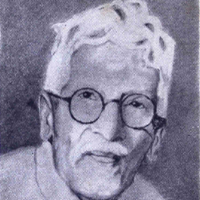
Profile of Hakeem Syed Shamsullah Qadri
Identity: “Shams al-Mu’arrikhin” (Sun of Historians), pioneer researcher of Deccani studies, distinguished historian and scholar of Urdu and history, archaeologist, and numismatist
Hakim Syed Muhammad Shamsullah Qadri, known by the title Shams al-Mu’arrikhin, was born on 5 November 1885 in Lal Bagh, Hyderabad Deccan. His ancestors were originally from Baghdad, and his lineage is said to trace back through thirty-seven generations to Sheikh Abdul Qadir Jilani. His forefathers migrated to India during the reign of Emperor Akbar and settled in Delhi. Later, they moved with Asaf Jah to Aurangabad and eventually settled permanently in Hyderabad. His family was renowned for scholarship and spiritual guidance.
Hakim Shamsullah Qadri was a distinguished historian, researcher, archaeologist, and numismatist. Persian, Urdu, history, archaeology, and coin studies were his principal fields of expertise, and his scholarship in these areas placed him among the foremost researchers of his era.
His contributions to the study of early Urdu and Deccani literature are of foundational importance. His celebrated work Urdu-e-Qadim is considered one of the earliest and most authoritative research works on the history of the Urdu language, introducing the early phases of Urdu through rigorous scholarship. For this landmark contribution, he is regarded as one of the pioneering architects of Urdu research.
In 1925, he launched the quarterly scholarly journal Tarikh, which published historical and research articles by him as well as by other prominent writers.
He conducted valuable research on the Islamic periods of Indian history, Arab-Indian relations, the coastal regions of South India, ancient maritime routes, and the causes of Islamic decline. His command of Arabic, Persian, Urdu, English, French, German, and Russian gave his research an international scholarly dimension.
In recognition of his academic services, the Government of Hyderabad granted him a lifelong monthly stipend in 1930. In 1946, due to old age, he retired from writing and research.
His major works include Urdu-e-Qadim, Tarikh Mashahir-e-Hind, Jawahir al-Ajaib, Sikka Jat-e-Awadh, Al-Nuqud al-Islamiyyah, Malibar se Arabon ke Talluqat, Maskukat-e-Qadimah, Portugizan-e-Malabar, Qamus al-A‘lam, Haqiqi Hindustan Sawahil-e-Dakan The, and Tarikh-e-Dakan.
In recognition of his invaluable contributions to the field of history, he was honored with the title “Shams al-Mu’arrikhin” (“Sun of Historians”).
Death: He passed away on 22 October 1953.
USEFUL LINKS : | https://en.wikipedia.org/wiki/Sayyid_Shamsullah_Qadri
join rekhta family!
-
Activities85
Children's Literature1987
-