- Index of Books 180433
-
-
Book Categories
-
Activities89
Children's Literature1979
Drama917 Education341 Essays & Profiles1360 Fiction1568 Health104 History3265Humorous593 Journalism200 Language & Literature1625 Letters726
Life Style30 Medicine969 Movements268 Novel4268 Political350 Religions4763Research & Criticism6518Short-story2665 Sketches232 Social issues109 Sufism / Mystic2007Text Books424 Translation4193Women's writings5755-
Book Categories
- Bait Bazi14
- Catalogue / Index4
- Couplets68
- Deewan1249
- Doha49
- Epics100
- Exegesis181
- Geet63
- Ghazal1259
- Haiku11
- Hamd57
- Humorous31
- Intikhab1579
- Keh mukarni6
- Kulliyat571
- Mahiya20
- Majmua4866
- Marsiya387
- Masnavi737
- Musaddas44
- Naat588
- Nazm1201
- Others84
- Paheli14
- Qasida177
- Qawwali16
- Qit'a67
- Quatrain263
- Quintuple15
- Rekhti12
- Remainders16
- Salaam34
- Sehra12
- shahr-Ashob, Hajw, Zatal Nama17
- Tareekh-Goi25
- Translation74
- Wasokht24
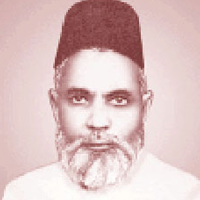
Profile of Maulana Mohammad Aslam Jairajpuri
Pen Name : 'Aslam Jairajpuri'
Real Name : Mohammad Aslam
Born : 27 Jan 1882 | Azamgarh, Uttar pradesh
Identity: Eminent Islamic Thinker, Historian, Scholar of Quran & Hadith, and Pioneer of the Movement for Religious Renewal.
Aslam Jairajpuri was born on January 27, 1882, in Jairajpur, Azamgarh. His father, Maulana Salamatullah Jairajpuri, was himself a distinguished religious scholar. Aslam Jairajpuri was raised in a purely academic and religious environment. He began his professional career with the daily newspaper Paisa in Lahore but soon started teaching at Aligarh Muslim University. Later, at the insistence of Maulana Mohammad Ali Jauhar, he moved to Jamia Millia Islamia, where he earned great renown as a Professor of Islamic History and Quranic Exegesis.
Allama Aslam Jairajpuri was a prolific writer. His masterpiece, Tarikh-ul-Ummat (in eight volumes), is a work where he relied solely on solid historical evidence and rational arguments. His other significant books include Tarikh-ul-Quran, Taleemat-e-Quran, Nawadirat, and Fateh-e-Misr. He believed that the Quran should be understood through the Quran itself. Due to this perspective, a section of thinkers categorized him as a 'Rejector of Hadith' (Munkir-e-Hadith), even though he considered the Uswah-e-Hasanah (the Prophet's example) and Sunnat-e-Mutawatirah as certain, while maintaining a distinct research-based stance on the historical status of individual Hadiths.
A vital aspect of his personality was his intellectual proximity to Allama Iqbal. He was influenced by Iqbal's thought, and Iqbal also respected his profound scholarship. When a controversy arose in academic circles regarding Iqbal's criticism of Hafiz Shirazi’s poetry in his poem Asrar-e-Khudi, Aslam Jairajpuri offered a very impartial and balanced commentary. He suggested to Iqbal that it would have been better if those verses about Hafiz had not been written, as they overshadowed the actual beneficial message of the poem. Iqbal viewed this commentary with great respect. Jairajpuri also considered the significance of Iqbal’s Javid Nama superior to the four great classic books of Persian literature. Allama Aslam Jairajpuri rendered unforgettable services in both religious understanding and the study of Iqbal.
Death: Allama Aslam Jairajpuri passed away on December 28, 1955, in Delhi.
USEFUL LINKS : | https://en.wikipedia.org/wiki/Aslam_Jairajpuri
join rekhta family!
-
Activities89
Children's Literature1979
-