- Index of Books 180976
-
-
Book Categories
-
Activities91
Children's Literature1984
Drama914 Education341 Essays & Profiles1371 Fiction1571 Health104 History3290Humorous598 Journalism200 Language & Literature1699 Letters739
Life Style30 Medicine973 Movements271 Novel4269 Political351 Religions4772Research & Criticism6541Short-story2667 Sketches234 Social issues110 Sufism / Mystic2012Text Books439 Translation4225Women's writings5781-
Book Categories
- Bait Bazi14
- Catalogue / Index4
- Couplets68
- Deewan1264
- Doha49
- Epics100
- Exegesis181
- Geet63
- Ghazal1257
- Haiku11
- Hamd56
- Humorous31
- Intikhab1592
- Keh mukarni6
- Kulliyat568
- Mahiya20
- Majmua4858
- Marsiya387
- Masnavi739
- Musaddas44
- Naat587
- Nazm1206
- Others84
- Paheli15
- Qasida178
- Qawwali16
- Qit'a67
- Quatrain264
- Quintuple15
- Rekhti12
- Remainders16
- Salaam34
- Sehra12
- shahr-Ashob, Hajw, Zatal Nama17
- Tareekh-Goi25
- Translation74
- Wasokht24
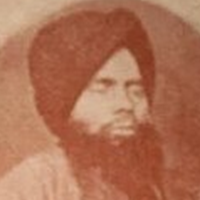
Profile of Mufti Ghulam Sarwar Lahori
Identity: A distinguished historian, biographer, writer, poet, and lexicographer
Mufti Ghulam Sarwar Lahori was born in 1244 AH (1837 CE) in Kotli Muftian, Lahore, into a scholarly family. He received his early education from his father, Mufti Ghulam Muhammad, from whom he also learned traditional medicine (Tibb). He was initiated into the Suhrawardi Sufi order by his father. Later, he studied under Maulana Ghulam Allah Lahori and gained expertise in Tafsir, Hadith, Fiqh, Arabic literature, grammar, rhetoric, logic, and history. In his time, he was recognized as an outstanding scholar, writer, poet, historian, biographer, and lexicographer.
In his early life, he worked for a short period in administrative roles. He first served as the manager of Sardar Bhagwan Singh’s estate, and later, through Rai Bahadur Kanhaiya Lal (his student), he obtained a government position. However, he soon resigned and devoted himself entirely to writing and scholarship.
He possessed a strong sense of independence and intellectual integrity. He avoided associations with rulers and always upheld his academic freedom. He declined government honors and maintained an independent scholarly path.
In 1884, during his meeting with Sir Syed Ahmad Khan, he respectfully declined the offer to join his reform movement and chose to remain dedicated to writing and scholarship.
Mufti Ghulam Sarwar Lahori’s contributions were multidimensional. He worked in history, biographical writing, literature, religion, and especially in lexicography.
His dictionaries such as “Zubdat al-Lughat” (Lughat-e-Sarwari) and “Jami‘ al-Lughat” are considered significant milestones in the development of the Urdu language. Similarly, works like “Tarikh Makhzan Punjab” and “Hadiqat al-Auliya” reflect his stature in historical and biographical writing.
Death: He passed away on 14 August 1890 during his Hajj journey, near Badr at Bir Bala Hassani, where he was also buried.
USEFUL LINKS : | https://en.wikipedia.org/wiki/Mufti_Ghulam_Sarwar_Lahori
Tagged Under
join rekhta family!
-
Activities91
Children's Literature1984
-