- Index of Books 180696
-
-
Book Categories
-
Activities89
Children's Literature1988
Drama921 Education347 Essays & Profiles1377 Fiction1653 Health108 History3344Humorous604 Journalism201 Language & Literature1145
Letters726 Life Style30 Medicine974 Movements268 Novel4278 Political349 Religions4769Research & Criticism6699Short-story2670 Sketches236 Social issues111 Sufism / Mystic2014Text Books440 Translation4190-
Book Categories
- Bait Bazi14
- Catalogue / Index4
- Couplets68
- Deewan1254
- Doha49
- Epics100
- Exegesis186
- Geet63
- Ghazal1265
- Haiku11
- Hamd59
- Humorous31
- Intikhab1583
- Keh mukarni6
- Kulliyat571
- Mahiya20
- Majmua4874
- Marsiya387
- Masnavi736
- Musaddas44
- Naat590
- Nazm1209
- Others84
- Paheli14
- Qasida179
- Qawwali16
- Qit'a67
- Quatrain264
- Quintuple15
- Rekhti12
- Remainders16
- Salaam34
- Sehra12
- shahr-Ashob, Hajw, Zatal Nama17
- Tareekh-Goi26
- Translation75
- Wasokht24
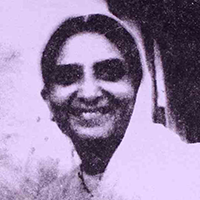
Profile of Qaisari Begum
Pen Name : 'Qaisari Begum'
Real Name : Qaisari Begum
Born :Delhi
Relatives : Deputy Nazir Ahmad (Maternal Grandfather)
Qaisari Begum (1888-1976) was born into a prominent political and literary family in Delhi; her grandfather, Deputy Nazir Ahmad (1831-1912), is regarded as the first Urdu-language novelist. Qaisari Begum grew up engaged in political and activist-oriented spheres, and was invested in community service, often focusing on issues of women’s education, throughout her life. As a young woman in 1928, she was chosen to attend the All India Women’s Conference in Delhi, as a delegate from Hyderabad. The historic conference addressed women’s rights, early marriage, and divorce among other pressing issues. Qaisari Begum also authored Kitab-i Zindagi (The Book of Life), an autobiography of her life’s work that is cherished and read by many today. The autobiography takes the reader through Qaisari Begum’s many travels between Delhi and Hyderabad and even Hajj, while still retaining a unique focus on the questions and concerns of domestic life. Her accounts were never written with the intention of publishing and widespread circulation: the intended audience was primarily her family members. The pieces, 260 in total, bound in seven separate notebooks, were kept by Qaisari Begum’s daughter Muhammadi Begum. Before Qaisari Begum’s passing, her brother’s grandson Shan-ul-Haq Haqqi (1917-2005) published her accounts in the literary journal, Urdunama, and the pieces were subsequently celebrated at large for not only their content, but also Qaisari Begum’s unique voice and writing style. Qaisari Begum was ecstatic upon hearing that her private writings had found such an extensive audience, although the series came to a sudden and saddening close when Urdunama shut down in 1976. Qaisari Begum passed away soon after, but her work was published as Kitab-i Zindagi (The Book of Life) in 2003, when her granddaughter Zehra Masroor Ahmad prepared a fully edited and published edition (republished 2018).
USEFUL LINKS : | https://accessingmuslimlives.org/profile/qaisari-begum/ | https://images.dawn.com/news/1182866
join rekhta family!
-
Activities89
Children's Literature1988
-