- Index of Books 180767
-
-
Book Categories
-
Activities90
Children's Literature1990
Drama923 Education347 Essays & Profiles1375 Fiction1656 Health108 History3352Humorous603 Journalism202 Language & Literature1142
Letters725 Life Style30 Medicine975 Movements268 Novel4284 Political349 Religions4779Research & Criticism6708Short-story2672 Sketches237 Social issues111 Sufism / Mystic2017Text Books441 Translation4197-
Book Categories
- Bait Bazi14
- Catalogue / Index4
- Couplets70
- Deewan1254
- Doha50
- Epics99
- Exegesis186
- Geet63
- Ghazal1269
- Haiku11
- Hamd61
- Humorous31
- Intikhab1583
- Keh mukarni6
- Kulliyat571
- Mahiya20
- Majmua4886
- Marsiya387
- Masnavi737
- Musaddas44
- Naat592
- Nazm1214
- Others84
- Paheli14
- Qasida179
- Qawwali16
- Qit'a68
- Quatrain264
- Quintuple15
- Rekhti12
- Remainders16
- Salaam34
- Sehra12
- shahr-Ashob, Hajw, Zatal Nama17
- Tareekh-Goi26
- Translation75
- Wasokht24
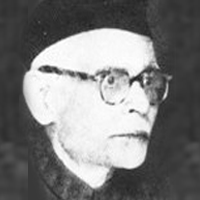
Profile of Qazi Abdul Gaffar
Real Name : Qazi Abdul Gaffar
Born :Moradabad, Uttar pradesh
Died : 17 Jan 1956 | Aligarh, Uttar pradesh
Identity: Eminent Journalist, Novelist, Short Story Writer, Translator, and Former General Secretary of Anjuman Taraqqi-e-Urdu
Qazi Abdul Ghaffar was born in December 1889 in the Tambaku Walan locality of Moradabad. He belonged to a scholarly and religious family; his grandfather, Ghazi Hamid Ali, served as the chief qazi of Moradabad, and his father, Qazi Abrar Ahmad, was among the respected figures of his time. He received his early education in Moradabad and passed high school in 1905, later completing his intermediate education at Aligarh Muslim University (then the Aligarh educational institution).
At his father’s insistence, he entered government service and was appointed as a tehsildar, but finding official service unsuited to his temperament, he soon resigned and returned to Moradabad, where he turned to journalism. He received his journalistic training under the guidance of the renowned nationalist leader and journalist Mohammad Ali Jauhar, who was leading Urdu journalism through his newspaper Hamdard.
In 1921, he traveled to London as a member of the Khilafat Committee delegation. Owing to his versatile temperament, he also ran a utensils business in Moradabad for some time, though unsuccessfully. From 1928 to 1930, he served as Chairman of the Moradabad Municipal Board. In 1934, he moved to Hyderabad, where he worked in the Information Department, and later moved to Lucknow and then Delhi.
After the Partition of India, he was appointed General Secretary of Anjuman Taraqqi-e-Urdu in 1947 at the behest of Abul Kalam Azad. He reorganized the institution, revived its branches across the country, established new chapters, and restored its vitality.
Qazi Abdul Ghaffar was a versatile literary figure. His notable works include:
Laila ke Khutoot — A powerful portrayal of a courtesan’s emotions and the exploitation of women
Majnun ki Diary — A reformative work focused on the mental and moral orientation of youth
Teen Paise ki Chhokri — A collection of short stories
Pindar ka Sanam Kada — A drama against caste discrimination and social inequality
Naqsh-e-Farang — A satirical and informative travelogue of Europe
Asar-e-Jamaluddin Afghani
Asar-e-Abul Kalam Azad
Hayat-e-Ajmal
Urdu translation of The Prophet by Kahlil Gibran under the title Us Ne Kaha
Translation of a novel by John Galsworthy titled Saib ka Darakht
His prose is marked by romanticism, psychological insight, social awareness, and satirical sharpness. Themes such as women’s exploitation, class disparity, religious hypocrisy, and social pretension occupy a central place in his writings.
Death: He passed away in Aligarh on 17 January 1956.
Tagged Under
join rekhta family!
-
Activities90
Children's Literature1990
-