- Index of Books 180433
-
-
Book Categories
-
Activities89
Children's Literature1980
Drama917 Education341 Essays & Profiles1363 Fiction1572 Health104 History3266Humorous593 Journalism200 Language & Literature1625 Letters727
Life Style30 Medicine969 Movements268 Novel4269 Political350 Religions4763Research & Criticism6519Short-story2666 Sketches232 Social issues109 Sufism / Mystic2007Text Books424 Translation4195Women's writings5755-
Book Categories
- Bait Bazi14
- Catalogue / Index4
- Couplets68
- Deewan1249
- Doha49
- Epics100
- Exegesis181
- Geet63
- Ghazal1259
- Haiku11
- Hamd57
- Humorous31
- Intikhab1581
- Keh mukarni6
- Kulliyat571
- Mahiya20
- Majmua4870
- Marsiya387
- Masnavi737
- Musaddas44
- Naat588
- Nazm1201
- Others84
- Paheli14
- Qasida177
- Qawwali16
- Qit'a67
- Quatrain263
- Quintuple15
- Rekhti12
- Remainders16
- Salaam34
- Sehra12
- shahr-Ashob, Hajw, Zatal Nama17
- Tareekh-Goi25
- Translation74
- Wasokht24
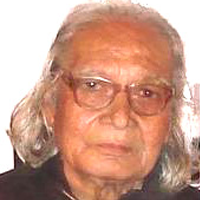
Profile of Qazi Abdus Sattar
Real Name : Abdus Sattar
Born : 09 Feb 1933 | Sitapur, Uttar pradesh
Died : 29 Oct 2018 | Delhi, India
Relatives : Ibne Kanwal (Disciple)
LCCN :n85102922
Identity: Eminent Novelist, Stylistic Short Story Writer, Architect of Historical Fiction, and Chronicler of Awadh's Culture.
Qazi Abdus Sattar was born on February 9, 1933, into an aristocratic family in Machhrehta, Sitapur district, Uttar Pradesh. In the realm of Urdu literature, he is recognized as a novelist and storyteller with a distinct style. He masterfully blended history, culture, and aesthetics with linguistic delicacy, securing his place among the most significant Urdu fiction writers.
Education and Academic Career: After completing his schooling in Sitapur, he moved to Lucknow University, where he secured the first position in both B.A. (Hons) in 1952 and M.A. in 1954. The cultural and literary ambiance of Lucknow deeply influenced his consciousness. Later, he joined Aligarh Muslim University (AMU), where he completed his Ph.D. under the supervision of Professor Rasheed Ahmad Siddiqui. He served in the Department of Urdu at AMU as a Professor and retired in 1993.
Literary Journey: His literary life began with research and criticism. His notable scholarly works include "Urdu Shairi Mein Qanootiyat" (Pessimism in Urdu Poetry) and "Jamaliyat aur Hindustani Jamaliyat" (Aesthetics and Indian Aesthetics). Although he initially gained attention with his revolutionary poem 'Gomti ki Awaz', he eventually chose prose as his permanent medium of expression.
Fiction and Style: Having been raised in a feudal environment, his stories vividly capture the disintegration of the Zamindari system, cultural decline, and a nostalgic longing for past grandeur. His 1964 short story "Peetal Ka Ghanta" (The Brass Bell) brought him extraordinary fame, serving as a lament for the decaying aristocratic culture of Awadh. In the field of novels, he revitalized history through masterpieces like "Khalid bin Walid", "Salahuddin Ayyubi", "Dara Shikoh", and "Ghalib."
He is hailed as the "Wizard of Diction" in Urdu prose. His style is characterized by elegance, poetic rhythm, and the exquisite use of metaphors and idioms. He adapted his language to suit the setting—be it rural, urban, or historical.
In recognition of his literary services, he was honored with the Padma Shri in 1974, among many other accolades.
Death: He passed away on October 29, 2018, in Delhi and was laid to rest in Aligarh.
USEFUL LINKS : | https://en.wikipedia.org/wiki/Qazi_Abdul_Sattar
Tagged Under
Authority Control :The Library of Congress Control Number (LCCN) : n85102922
join rekhta family!
-
Activities89
Children's Literature1980
-