- Index of Books 180769
-
-
Book Categories
-
Activities90
Children's Literature1990
Drama923 Education347 Essays & Profiles1375 Fiction1655 Health108 History3351Humorous603 Journalism201 Language & Literature1142
Letters725 Life Style30 Medicine975 Movements268 Novel4284 Political349 Religions4779Research & Criticism6707Short-story2672 Sketches237 Social issues111 Sufism / Mystic2017Text Books441 Translation4198-
Book Categories
- Bait Bazi14
- Catalogue / Index4
- Couplets70
- Deewan1254
- Doha50
- Epics99
- Exegesis186
- Geet63
- Ghazal1269
- Haiku11
- Hamd61
- Humorous31
- Intikhab1583
- Keh mukarni6
- Kulliyat571
- Mahiya20
- Majmua4886
- Marsiya387
- Masnavi737
- Musaddas44
- Naat592
- Nazm1214
- Others84
- Paheli14
- Qasida179
- Qawwali16
- Qit'a68
- Quatrain264
- Quintuple15
- Rekhti12
- Remainders16
- Salaam34
- Sehra12
- shahr-Ashob, Hajw, Zatal Nama17
- Tareekh-Goi26
- Translation75
- Wasokht24
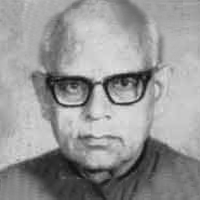
Profile of Shaukat Sabzwari
Identity: Eminent Linguist, Critic, and Researcher
Shaukat Sabzwari, according to Malik Ram, was born in 1905 or 1906 in Meerut. His real name was Syed Shaukat Ali, and his father’s name was Syed Asad Ali. His ancestors migrated from Mashhad (Iran) to India during the Mughal era and settled in Mirzapur, a locality in the Bulandshahr district. When the peace and harmony of that region was disrupted during the war of 1857, his family permanently relocated to Meerut.
He received his education in Persian and Arabic from Madrasa Imdad-ul-Uloom in Meerut, subsequently passing the Maulvi Fazil examination in 1924 and Munshi Fazil in 1927. Despite his father’s opposition to Western education, he pursued English studies and went on to pass all examinations from intermediate to master's degrees as a private student. He earned M.A. degrees in both Persian and Arabic, obtained a degree in Law (LL.B.), and later completed another M.A. in Urdu from Agra University. Professionally, he initially taught at Islamia Inter College, Bareilly, and later joined the Persian department of Meerut College as a faculty member.
Following the partition of India, upon the insistence of Andaleeb Shadani, he migrated to Dhaka, where he was appointed as the Head of the Urdu Department at Dhaka University. It was here that he was awarded his Doctorate (Ph.D.) in Urdu Linguistics in 1952, a research project he had been preparing for since his days in Meerut. He began his literary journey as a short story writer, publishing his first fiction piece in the renowned journal 'Adabi Dunya'. Subsequently, he continued contributing to prestigious literary magazines like 'Nigar' and 'Maarif'.
Dr. Sabzwari’s academic fame began with the publication of his first book, "Falsafa-e-Kalam-e-Ghalib" in 1946. However, his true recognition as a linguist was established when his research thesis, "Urdu Zaban Ka Irtika" (The Evolution of Urdu Language), was published in book form from Dhaka in 1956. His other prominent books in the field of linguistics include "Dastan-e-Zaban-e-Urdu", "Lisani Masail", and "Urdu Lisaniyat". His publications provided fresh dimensions and perspectives to the history and discourse of the Urdu language.
In the realm of Ghalib studies, "Ghalib: Fikr-o-Fan" stands as one of his major works, while his collections of critical essays titled "Meyar-e-Adb" and "Nayi Purani Qadrein" remain highly valuable treasures of Urdu literature. In recognition of his outstanding contributions to Urdu linguistics, he was honored with the prestigious "Dawood Literary Award".
Death: Shaukat Sabzwari passed away on March 19, 1973, in Karachi.
USEFUL LINKS : | https://ur.wikipedia.org/wiki/%D8%B4%D9%88%DA%A9%D8%AA_%D8%B3%D8%A8%D8%B2%D9%88%D8%A7%D8%B1%DB%8C
join rekhta family!
-
Activities90
Children's Literature1990
-