- Index of Books 180675
-
-
Book Categories
-
Activities89
Children's Literature1989
Drama921 Education347 Essays & Profiles1376 Fiction1656 Health108 History3343Humorous604 Journalism201 Language & Literature1145
Letters726 Life Style30 Medicine974 Movements268 Novel4276 Political349 Religions4769Research & Criticism6691Short-story2670 Sketches236 Social issues111 Sufism / Mystic2013Text Books440 Translation4189-
Book Categories
- Bait Bazi14
- Catalogue / Index4
- Couplets68
- Deewan1254
- Doha49
- Epics100
- Exegesis186
- Geet63
- Ghazal1264
- Haiku11
- Hamd59
- Humorous31
- Intikhab1581
- Keh mukarni6
- Kulliyat571
- Mahiya20
- Majmua4873
- Marsiya387
- Masnavi735
- Musaddas44
- Naat590
- Nazm1209
- Others84
- Paheli14
- Qasida179
- Qawwali16
- Qit'a67
- Quatrain264
- Quintuple15
- Rekhti12
- Remainders16
- Salaam34
- Sehra12
- shahr-Ashob, Hajw, Zatal Nama17
- Tareekh-Goi26
- Translation75
- Wasokht24
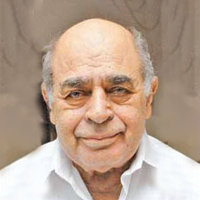
Profile of Waris Alvi
Identity: Eminent critic, fiction specialist, exponent of ideological literature, and a representative writer of a bold critical style.
Waris Alvi (Real name: Syed Waris Hussain Alvi) was born on June 11, 1928, in Ahmedabad, Gujarat. He is ranked among those distinguished Urdu critics who introduced a new perspective to Urdu literature through their blunt, courageous, and intellectual criticism. He completed his M.A. in Urdu, Persian, and English, and subsequently joined the Department of English at St. Xavier's College, Ahmedabad, where he retired as the Head of the Department.
Waris Alvi was a versatile personality in Urdu literature. He held a prominent position as a critic, researcher, playwright, translator, and teacher; however, his primary identity is that of a bold and unbiased critic. His criticism is based on realism, intellectual integrity, and objectivity, while his style is characterized by satire, wit, and incisiveness. Avoiding literary compromises, he independently analyzed every literary text and trend.
His forte was fiction criticism, but he also wrote profound and thought-provoking essays on poetry, ideological literature, social discourse, and critical principles. His ideological essays, particularly on 'Literature and Commitment', 'Literature and Society', 'Literature and Politics', 'Literature and Ideology', and 'Riots and Literature', hold extraordinary importance in Urdu criticism. These writings reflect his extensive reading, mastery of Western and Eastern literature, and deep intellectual consciousness.
Waris Alvi expressed his views fearlessly on major Urdu critics and writers. He critically reviewed the theories of important critics such as Ale Ahmad Suroor, Kalimuddin Ahmed, Ahsan Farooqi, Shamim Hanfi, Gopi Chand Narang, and Shamsur Rahman Faruqi. He strongly criticized superficiality, factionalism, and unnecessary flattery in Urdu criticism.
His book on Maulana Hali and Muqaddama-e-Sher-o-Shairi, titled "Hali, Muqaddama aur Hum", is considered one of the most important books in Urdu criticism. In this book, he logically defended Hali’s critical insight and addressed the objections raised by modern critics. For him, Hali was the first complete and formal critic of Urdu.
Major Works: Khanda-ha-e-Beja, Kuch Bacha Laya Hoon, Auraq-e-Pareena, Bourgeoisie Bourgeoisie, Adab Ka Ghair Aham Aadmi, Likhte Ruqqa Likhe Gaye Daftar, Nakhun Ka Qarz, Hali Muqaddama aur Hum, Butkhana-e-Cheen, and Teesre Darje Ka Musafir (on Rajinder Singh Bedi) are particularly noteworthy.
Death: He passed away on January 9, 2014.
USEFUL LINKS : | https://ur.wikipedia.org/wiki/%D9%88%D8%A7%D8%B1%D8%AB_%D8%B9%D9%84%D9%88%DB%8C
Authority Control :The Library of Congress Control Number (LCCN) : n81130996
join rekhta family!
-
Activities89
Children's Literature1989
-