- Index of Books 180433
-
-
Book Categories
-
Activities89
Children's Literature1980
Drama917 Education341 Essays & Profiles1363 Fiction1572 Health104 History3266Humorous593 Journalism200 Language & Literature1625 Letters727
Life Style30 Medicine969 Movements268 Novel4269 Political350 Religions4763Research & Criticism6519Short-story2666 Sketches232 Social issues109 Sufism / Mystic2007Text Books424 Translation4195Women's writings5755-
Book Categories
- Bait Bazi14
- Catalogue / Index4
- Couplets68
- Deewan1249
- Doha49
- Epics100
- Exegesis181
- Geet63
- Ghazal1259
- Haiku11
- Hamd57
- Humorous31
- Intikhab1581
- Keh mukarni6
- Kulliyat571
- Mahiya20
- Majmua4870
- Marsiya387
- Masnavi737
- Musaddas44
- Naat588
- Nazm1201
- Others84
- Paheli14
- Qasida177
- Qawwali16
- Qit'a67
- Quatrain263
- Quintuple15
- Rekhti12
- Remainders16
- Salaam34
- Sehra12
- shahr-Ashob, Hajw, Zatal Nama17
- Tareekh-Goi25
- Translation74
- Wasokht24
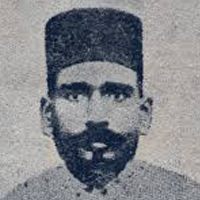
Profile of Abdussalam Nadvi
Real Name : Abdus Salam
Born : 16 Feb 1883 | Azamgarh, Uttar pradesh
Died : 04 Oct 1956 | Azamgarh, Uttar pradesh
LCCN :n84230663
Identity: A distinguished researcher, historian, writer, and a disciple of Shibli
Maulana Abdul Salam Nadvi was one of the great scholars and writers of the Urdu world. He made valuable contributions in history, biography (Seerat), literature, and translation. He was among the earliest graduates of Darul Uloom Nadwatul Ulama, a beloved student of Allama Shibli Nomani, and a founding member of Darul Musannifeen Shibli Academy. His life was a model of dedication, sincerity, and simplicity.
He was born on 16 February 1883 in the village of Aladdin Patti in Azamgarh. His father, Sheikh Din Muhammad, was skilled in Persian, Hindi, and traditional mathematics, and had good religious knowledge. Abdul Salam received his early education in the village, then studied Arabic in Kanpur, Agra, and Ghazipur. In 1906, at the age of 23, he joined Nadwa. After graduating in 1910, he became a teacher of Arabic literature there.
He loved reading and writing from a young age. In 1906, he wrote an article on “reincarnation” which greatly impressed Allama Shibli. It was published in the journal Al-Nadwa without edits and he was given a reward. Later, he also worked as an editor for the journal. Shibli Nomani made him his assistant during the writing of Seerat-un-Nabi.
In 1912, he went to Calcutta with Maulana Abul Kalam Azad and worked for the newspaper Al-Hilal. In 1914, when Al-Hilal was closed and Shibli Nomani passed away, he joined Darul Musannifeen Shibli Academy and spent the rest of his life there in research and writing. He played a key role in developing the institution along with Syed Sulaiman Nadvi.
He was simple, quiet, and avoided fame. He devoted his life to writing and research, staying away from politics, positions, and material gain.
His works cover history, literature, and translations. His famous books include Uswa-e-Sahaba, Uswa-e-Sahabiyat, Seerat Umar bin Abdul Aziz, Hukama-e-Islam, Sher-ul-Hind, Iqbal Kamil, History of Islamic Jurisprudence (translation), Ibn Khaldun (translation) and others.
Uswa-e-Sahaba is considered one of the earliest reliable Urdu books on the lives of the Companions. Because of Iqbal Kamil, he is regarded as one of the earliest scholars of Iqbal studies.
His prose combines depth of knowledge with simplicity and literary beauty. He also continued and expanded the scholarly projects of his teacher Shibli Nomani.
Death: He passed away on 4 October 1955 in the premises of Darul Musannifeen and was buried beside his teacher Allama Shibli Nomani.
USEFUL LINKS : | https://en.wikipedia.org/wiki/Abdul_Salam_Nadwi
Authority Control :The Library of Congress Control Number (LCCN) : n84230663
join rekhta family!
-
Activities89
Children's Literature1980
-