- Index of Books 180744
-
-
Book Categories
-
Activities89
Children's Literature1989
Drama923 Education347 Essays & Profiles1375 Fiction1655 Health108 History3343Humorous603 Journalism201 Language & Literature1141
Letters724 Life Style30 Medicine974 Movements268 Novel4282 Political349 Religions4769Research & Criticism6693Short-story2672 Sketches237 Social issues111 Sufism / Mystic2014Text Books440 Translation4189-
Book Categories
- Bait Bazi14
- Catalogue / Index4
- Couplets70
- Deewan1254
- Doha50
- Epics99
- Exegesis186
- Geet63
- Ghazal1264
- Haiku11
- Hamd60
- Humorous31
- Intikhab1582
- Keh mukarni6
- Kulliyat571
- Mahiya20
- Majmua4875
- Marsiya386
- Masnavi737
- Musaddas44
- Naat591
- Nazm1209
- Others84
- Paheli14
- Qasida179
- Qawwali16
- Qit'a67
- Quatrain264
- Quintuple15
- Rekhti12
- Remainders16
- Salaam34
- Sehra12
- shahr-Ashob, Hajw, Zatal Nama17
- Tareekh-Goi26
- Translation75
- Wasokht24
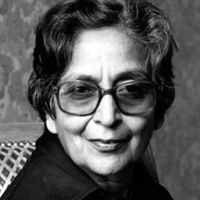
Profile of Amrita Pritam
Identity: A renowned 20th-century Punjabi and Hindi author, novelist, and eminent poet; a globally acclaimed figure who gave a voice to the anguish of the Partition of India.
Amrita Pritam was born on August 31, 1919, in Gujranwala (present-day Pakistan). Her birth name was Amrit Kaur. Her father, Kartar Singh Hitkari, was a poet, scholar, and editor of a literary journal, under whose influence she began writing at a very young age. After her early years, she moved to Lahore with her father, where her literary training took place and her formal literary journey began. Following her mother's death when she was only 11, she faced profound loneliness and turned to poetry as a sanctuary.
Her first collection of poems, 'Amrit Lehran', was published in 1936 at the age of 16. That same year, she married Pritam Singh, changing her name from Amrit Kaur to Amrita Pritam.
The Partition of India proved to be the most significant turning point in her life and literature. She migrated from Lahore to Delhi, but the trauma of this displacement gave her historical words that still resonate on both sides of the border.
'Ajj Aakhaan Waris Shah Nu': Written about the Partition riots and the atrocities against women, this poem became her signature work. In it, she addressed the 18th-century legendary poet Waris Shah, mourning the tragedies of Punjab.
Pinjar (Novel): Her novel is a tragic saga of violence against women and the decline of humanity; it was adapted into an award-winning film in 2003.
Autobiography: Her autobiography, 'Rasidi Ticket' (The Revenue Stamp), is considered a supreme example of truth and boldness in Urdu and Punjabi literature.
Amrita began her journey as a romantic poet but soon became associated with the Progressive Writers' Movement. Her writings present a powerful voice against social injustices, particularly the exploitation of women. In the later years of her life, she leaned toward spirituality and mysticism and was influenced by the teachings of Osho.
Amrita Pritam's life was a beautiful blend of love and struggle. The stories of her unrequited love for Sahir Ludhianvi are immortalized in 'Rasidi Ticket'. She spent the last 40 years of her life with the artist and writer Imroz, who remained with her until her passing. Their unique companionship was also documented in the book 'Amrita Imroz: A Love Story'.
In 1956, she became the first woman to receive the Sahitya Akademi Award for Punjabi literature. In addition to India’s highest literary honor, the Jnanpith Award (1982), she was conferred with the Padma Vibhushan (2004). She also served as a member of the Rajya Sabha.
Death: She passed away on October 31, 2005, in New Delhi after a long illness.
USEFUL LINKS : | https://en.wikipedia.org/wiki/Amrita_Pritam
Tagged Under
join rekhta family!
-
Activities89
Children's Literature1989
-