- Index of Books 180745
-
-
Book Categories
-
Activities89
Children's Literature1989
Drama923 Education347 Essays & Profiles1375 Fiction1655 Health108 History3343Humorous603 Journalism201 Language & Literature1140
Letters725 Life Style30 Medicine975 Movements268 Novel4282 Political349 Religions4770Research & Criticism6699Short-story2672 Sketches237 Social issues111 Sufism / Mystic2017Text Books440 Translation4189-
Book Categories
- Bait Bazi14
- Catalogue / Index4
- Couplets70
- Deewan1254
- Doha50
- Epics99
- Exegesis186
- Geet63
- Ghazal1268
- Haiku11
- Hamd60
- Humorous31
- Intikhab1583
- Keh mukarni6
- Kulliyat571
- Mahiya20
- Majmua4880
- Marsiya386
- Masnavi737
- Musaddas44
- Naat591
- Nazm1211
- Others84
- Paheli14
- Qasida179
- Qawwali16
- Qit'a67
- Quatrain264
- Quintuple15
- Rekhti12
- Remainders16
- Salaam34
- Sehra12
- shahr-Ashob, Hajw, Zatal Nama17
- Tareekh-Goi26
- Translation75
- Wasokht24
Profile of Minnatullah Rahmani
Identity: Sayed Minnatullah Rahmani (1913–1991) was a prominent Islamic scholar, thinker, writer, and social reformer of the Indian subcontinent. He was known as a strong advocate of Muslim unity, balanced thinking, and mutual tolerance. Due to his intellectual depth, organizational ability, and commitment to community service, he is regarded as one of the most influential Muslim leaders of the twentieth century.
He was born on April 7, 1913, in Munger, Bihar. His father, Muhammad Ali Mongiri, was a renowned religious scholar associated with the Nadwatul Ulama movement. This scholarly and spiritual environment played a crucial role in shaping his personality.
After completing his early education in Munger, he studied Arabic and Islamic sciences in Hyderabad. He then pursued further studies at Darul Uloom Nadwatul Ulama, Lucknow, and later at Darul Uloom Deoband, where he benefited from leading scholars, including Shaikh-ul-Islam Hussain Ahmad Madani.
Maulana Rahmani was active in both social service and politics. In the 1930s, he participated in Muslim political activities in Bihar and was elected as a member of the legislative assembly. Later, he became the Sajjada Nashin of Khanqah Rahmani and served in this capacity for nearly fifty years, providing spiritual and reformative guidance.
He made remarkable contributions to the field of education. By reorganizing Jamia Rahmani, he transformed it into a prestigious Islamic institution and worked to harmonize religious education with modern requirements.
At the national level, his greatest achievement was his key role in establishing the All India Muslim Personal Law Board. In 1972, he became its first General Secretary and laid strong foundations for the constitutional and legal protection of Muslim personal law. He also served as the fourth Amir-e-Shariat of Imarat-e-Shariah Bihar, Odisha, and Jharkhand.
Internationally, he represented India at the Muslim World League conference in 1964, strengthening intellectual and organizational ties with the Muslim world.
Ideologically, Maulana Rahmani believed in moderation, wisdom, and tolerance. He considered differences of opinion a blessing and strongly opposed sectarianism. His writings and speeches emphasized moral reform, unity, and collective consciousness.
Death: Sayed Minnatullah Rahmani passed away on March 19, 1991, and was buried in Munger.
USEFUL LINKS : | https://ur.wikipedia.org/wiki/%D9%85%D9%86%D8%AA_%D8%A7%D9%84%D9%84%DB%81_%D8%B1%D8%AD%D9%85%D8%A7%D9%86%DB%8C
Tagged Under
join rekhta family!
-
Activities89
Children's Literature1989
-
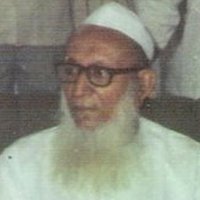
A Distinguished Islamic scholar, thinker, and community leader of India
A Distinguished Islamic scholar, thinker, and community leader of India