- Index of Books 180347
-
-
Book Categories
-
Activities89
Children's Literature1978
Drama916 Education341 Essays & Profiles1360 Fiction1569 Health104 History3266Humorous592 Journalism200 Language & Literature1680 Letters727
Life Style30 Medicine969 Movements268 Novel4264 Political350 Religions4763Research & Criticism6485Short-story2661 Sketches233 Social issues109 Sufism / Mystic2007Text Books424 Translation4199Women's writings5756-
Book Categories
- Bait Bazi14
- Catalogue / Index4
- Couplets68
- Deewan1250
- Doha49
- Epics100
- Exegesis181
- Geet63
- Ghazal1256
- Haiku11
- Hamd56
- Humorous31
- Intikhab1578
- Keh mukarni6
- Kulliyat571
- Mahiya20
- Majmua4864
- Marsiya387
- Masnavi737
- Musaddas44
- Naat587
- Nazm1200
- Others84
- Paheli14
- Qasida177
- Qawwali16
- Qit'a67
- Quatrain263
- Quintuple15
- Rekhti12
- Remainders16
- Salaam34
- Sehra12
- shahr-Ashob, Hajw, Zatal Nama17
- Tareekh-Goi25
- Translation74
- Wasokht24
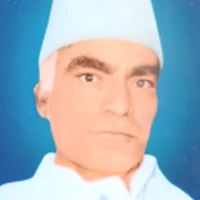
Profile of Murad Saeedi
Rajasthan has always been an important and historically significant province, previously known as Rajputana, and was divided into several small and large independent states. While this province housed powerful states such as Mewar, Marwar, and Jaipur, the state of Tonk came into existence in the early 19th century (1817). This state was founded by Nawab Ameer Khan and was the only Muslim-ruled state in Rajasthan. Even before and after independence, it remained a center of learning and literature. Though Tonk no longer holds the status of a state, its pre-independence literary influences can still be observed today.
Although the town may no longer produce legendary scholars and poets of national fame, the legacy of its literary masters continues to illuminate the world of literature. Among such personalities is Murad Saeedi, who not only preserved the literary traditions of the princely era but also contributed to the modern literary landscape. His works helped enhance poetic literature while inspiring contemporary poets to pursue high-quality poetry.
Birth and Education:
Murad Saeedi, whose real name was Hafiz Imaduddin Khan, was born on July 21, 1923, in Tonk. His father was Mufti Sirajuddin Khan. He received his early education at home and later passed the Adeeb and Adeeb Mahir examinations from Jamia Urdu, Aligarh.
After completing his education, he pursued a government job and joined the Excise Department, where he served until retirement. Murad Saeedi passed away on May 24, 1989.
His father, Mufti Sirajuddin Khan, originally belonged to Swat (now in Pakistan) and migrated to Tonk during the reign of Nawab Ibrahim Ali Khan. Recognizing his knowledge and expertise, the Nawab appointed him as the administrator of the poetic court, which brought great honor and respect to the family in Tonk.
Literary Journey:
Murad Saeedi had an inclination toward poetry from a young age. His passion for poetry led him to the company of renowned poets like Sault Tonki and Bismil Saeedi. He initially received guidance from Sault Tonki but later became a student of Bismil Saeedi (1901-1976). Under his mentorship, Murad Saeedi flourished as a poet and adopted the pen name "Saeedi".
He remained under Bismil Saeedi’s tutelage for nearly thirty years, which significantly shaped his literary prowess. Over time, major historical events like India's independence and partition deeply impacted society. For a while, literature experienced a phase of stagnation, but gradually, life returned to normal, and poetry gatherings resumed. This marked the beginning of a new era in Urdu poetry.
Literary Contributions:
A look at Murad Saeedi’s literary works presents the following list:
Guldasta-e-Murad (Poetry Collection) – Compiled by Shauq Ahsani (2017)
Azizon Ke Darmiyan (Poetry Collection) – Compiled by Suhail Payami (2022)
Ghairat-e-Gulzar (Collection of Chahar Bait) – Compiled by Dr. Saadat Raees (2024)
Murad Saeedi: Shakhs aur Shair (Collection of Articles) – Compiled by Syed Sajid Ali Tonki (2024)join rekhta family!
-
Activities89
Children's Literature1978
-