- Index of Books 180518
-
-
Book Categories
-
Activities89
Children's Literature1980
Drama917 Education342 Essays & Profiles1363 Fiction1584 Health104 History3263Humorous593 Journalism200 Language & Literature1625 Letters727
Life Style30 Medicine970 Movements267 Novel4270 Political350 Religions4762Research & Criticism6519Short-story2666 Sketches232 Social issues109 Sufism / Mystic2007Text Books423 Translation4190Women's writings5753-
Book Categories
- Bait Bazi14
- Catalogue / Index4
- Couplets68
- Deewan1248
- Doha49
- Epics100
- Exegesis181
- Geet63
- Ghazal1259
- Haiku11
- Hamd57
- Humorous31
- Intikhab1581
- Keh mukarni6
- Kulliyat571
- Mahiya20
- Majmua4872
- Marsiya387
- Masnavi737
- Musaddas44
- Naat588
- Nazm1200
- Others84
- Paheli14
- Qasida177
- Qawwali16
- Qit'a67
- Quatrain263
- Quintuple15
- Rekhti12
- Remainders16
- Salaam34
- Sehra12
- shahr-Ashob, Hajw, Zatal Nama17
- Tareekh-Goi25
- Translation74
- Wasokht24
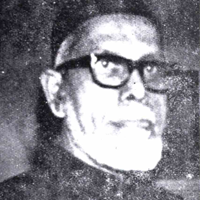
Profile of Syed Sabahuddin Abdur Rahman
Identity: Eminent Researcher, Historian, Writer, and a Leading Scholar of the Shibli School
Syed Sabahuddin Abdur Rahman was a distinguished researcher, historian, and writer in the Urdu world, known particularly for his significant contributions to Islamic history, Sufism, Muslim rulers, and the cultural traditions of the Indian subcontinent. He is regarded as one of the prominent representatives of the Shibli School, with notable services in research and editorial scholarship.
He was born in 1911 in Desna, near Bihar Sharif in the Nalanda district of Bihar. He belonged to a scholarly and religious family. He received his early education at Madrasa Al-Islah in Desna, where he benefited from the guidance of eminent scholars like Syed Sulaiman Nadvi. He later studied at the Mohammadan Anglo-Arabic School in Patna. He completed his matriculation from Nalanda College in 1925, obtained a B.A. from Langat Singh College, and an M.A. from Patna University. Subsequently, he joined Jamia Millia Islamia as a researcher under the supervision of Muhammad Mujeeb.
In 1935, he began his teaching career at Shibli College, Azamgarh, but soon joined Darul Musannefin Shibli Academy at the invitation of Syed Sulaiman Nadvi. He later served as its Director and Secretary. He also edited the renowned scholarly journal Ma’arif and played a key role in establishing its academic prestige.
His scholarly contributions cover a wide range of subjects. He authored numerous important works on Indian history, Islamic culture, biographies of Sufis, Muslim rulers, and religious-cultural themes. His notable books include Bazm-e-Taimuriya, Bazm-e-Mamlukiya, Hindustan ke Salatin, Ulama aur Mashaikh ke Ta’alluqat, Religious Tolerance of Muslim Rulers, Amir Khusro Dehlavi: Life and Poetry, Islam and Orientalists, and The Crusades. His book “Babri Masjid: In the Light of Historical Background and Perspective” also gained considerable attention.
His writings are marked by depth of research, historical insight, and a balanced style. He approached subjects with intellectual honesty and contributed significantly to elevating the standards of historical writing in Urdu. His works continue to serve as important references for scholars.
He was a serious, dedicated, and knowledge-oriented individual who devoted his entire life to research and writing. His role in carrying forward the intellectual tradition of the Shibli School remains highly significant.
Death: He passed away on 18 November 1987.
USEFUL LINKS : | https://en.wikipedia.org/wiki/Sabahuddin_Abdur_Rahman
Tagged Under
Authority Control :The Library of Congress Control Number (LCCN) : n82162146
join rekhta family!
-
Activities89
Children's Literature1980
-