Featured Video
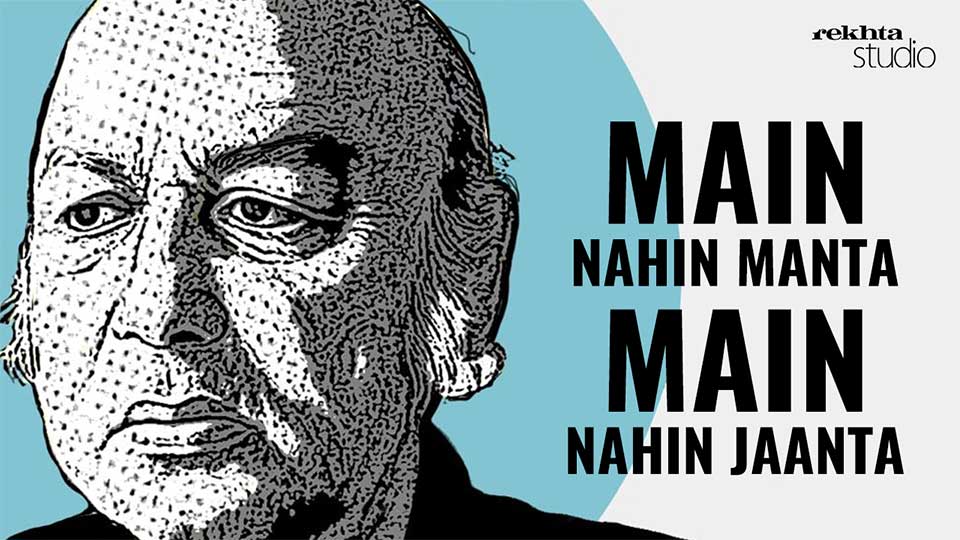
Habib Jalib
Main Nahin Maanta Main Nahin Jaanta | Habib Jalib | Rekhta Studio
Today's top 5 Urdu Shayari
WORD OF THE DAY
markaz
- मरकज़
- مرکز
means
the centre, the centre ofa circle, the upper stroke
markaz pe apne dhuup simaTtī hai jis tarah
yuuñ rafta rafta tere qarīb aa rahā huuñ maiñ
markaz pe apne dhup simaTti hai jis tarah
yun rafta rafta tere qarib aa raha hun main
DID YOU KNOW ?
Nastaleeq is a beautiful script in which Urdu is written, which was designed in Iran in the fourteenth and fifteenth centuries. ‘Naskh’ is the script in which Arabic is usually written. And Taleeq is a Persian script. Both of them were merged to become Nastaleeq. It is interesting to note that in Urdu the word Nastaleeq is used for a cultured, well mannered and refined person.
DID YOU KNOW ?
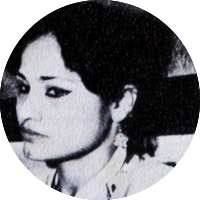
Sara Shagufta was a modernist Pakistani poet. Born in a lower-class family, her family migrated to Karachi from Punjab during the partition of India. Hers was a life of struggles. Belonging to a poor and uneducated family, she wanted to rise socially through education but could not pass her matriculation. She got married when she was 17. This was followed by three more unsuccessful marriages. She was deeply hurt with the death of her new born son and the indifference of her husbands. Badly treated by her husbands and society alike inspired her to write poetry and she continued to write with rare zeal. Suffering from a mental illness, she had to be admitted into an asylum. After an unsuccessful suicide attempt, she finally committed suicide at an early age of 29, by throwing herself before a train.
DID YOU KNOW ?
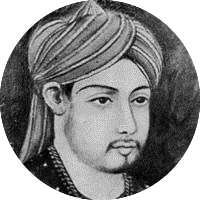
The first notable example of literary Urdu can be found in the works of Amir Khusrau, who lived
from 1253 to 1325. Khusro was a pioneer in the literary use of the language, and his works
included folksongs, riddles, and traditional couplets known as dohas. He was a spiritual disciple of Hazrat Nizamuddin Auliya of Delhi. Khusro died in October 1325, six months after the death of his spiritual master, and his tomb is in Nizamuddin Dargah, next to that of Nizamuddin Auliya.
DID YOU KNOW ?
In Urdu, the word ‘Mallah’ means a sailor or mariner. The word finds its roots in the Arabic word ‘Milh’, meaning salt. Since seawater is salty, those who made salt from the sea were originally called Mallah. Later, those who frequented the sea came to be known as Mallah. And now, boatmen of sweet-water lakes are referred to as Mallah, too. The word ‘Malahat’, quite common in Urdu literature, is also related to ‘Milh’, it means being salty, sallow, or beautiful. Poets have brought out different shades of this word in various couplets.
Another word which is very common in Urdu poetry, and related to boat and water voyage, is NaaKhuda’. It is a combination of two words ‘Naav (boat)’ and ‘Khuda (Lord)’, and comes from Persian, it means the Lord of the boat or captain.
tumhii.n to ho jise kahtii hai naaKHudaa duniyaa
bachaa sako to bachaa lo ki Duubtaa huu.n mai.n
DID YOU KNOW ?
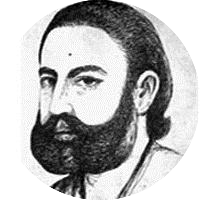
The general notion about Mir Taqi Mir is that he was a heartbroken man who only wrote couplets of sorrow and pain. But few bring to light his fondness of animals- which is quite manifest in his creative Masnavis and autobiographical poems. Other poets have also written about animals, but in Mir's couplets animals have a human aspect about them, they depict various human shades and attributes. The characterization of a cat in his Nazm ‘Mohni Billi’ is quite evident, and in ‘Kapi Ka Bachcha’, the baby monkey gives the feeling of a human. Mir’s Masnavi ‘Mor-Nama’, is a tragic story of the love of a queen and a peacock, in which both are burnt to death. Apart from this, he also has poems on chicken, goat, etc.
His famous Masnavi ‘Azhdar-Nama’ is full of mentions of animals, their habits, and characteristics. In addition to the main character which is a dragon, it includes 30 different animals. Muhammad Hussain Azad has written that Mir has suggested at himself being the dragon, and considered all other poets as insects of the earth. However, no mention of any poet’s name is found in it.
Today's Special

Prominent poet of Rampur style who was described by Mirza Ghalib as 'Mir of Rampur'.
añgḌā.ī bhī vo lene na paa.e uThā ke haath
dekhā jo mujh ko chhoḌ diye muskurā ke haath
angDai bhi wo lene na pae uTha ke hath
dekha jo mujh ko chhoD diye muskura ke hath
E-Books Library
Discover books & magazines in the world’s largest online collection of Urdu literature
E-Books Library