- Index of Books 180305
-
-
Book Categories
-
Activities89
Children's Literature1979
Drama917 Education341 Essays & Profiles1360 Fiction1567 Health104 History3264Humorous593 Journalism200 Language & Literature1625 Letters726
Life Style30 Medicine969 Movements268 Novel4266 Political350 Religions4763Research & Criticism6513Short-story2664 Sketches232 Social issues109 Sufism / Mystic2007Text Books424 Translation4193Women's writings5755-
Book Categories
- Bait Bazi14
- Catalogue / Index4
- Couplets68
- Deewan1248
- Doha49
- Epics100
- Exegesis181
- Geet63
- Ghazal1258
- Haiku11
- Hamd57
- Humorous31
- Intikhab1576
- Keh mukarni6
- Kulliyat571
- Mahiya20
- Majmua4863
- Marsiya387
- Masnavi737
- Musaddas44
- Naat587
- Nazm1201
- Others84
- Paheli14
- Qasida177
- Qawwali16
- Qit'a67
- Quatrain263
- Quintuple15
- Rekhti12
- Remainders16
- Salaam34
- Sehra12
- shahr-Ashob, Hajw, Zatal Nama17
- Tareekh-Goi25
- Translation74
- Wasokht24
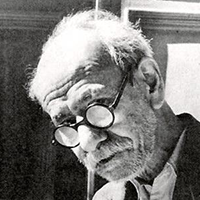
Profile of Ali Akbar Dahkhuda
Identity: Eminent Persian litterateur, lexicographer, distinguished satirist, and the author of 'Lughat-nama-ye Dehkhuda'.
Ali Akbar Dehkhuda was born in 1879 in the Sangalaj neighborhood of Tehran. His father, Khan Baba Khan, was a middle-class landowner from Qazvin. Dehkhuda was a brilliant Iranian man of letters, linguist, poet, and politician. He is the founder and author of the most comprehensive Persian dictionary, 'Lughat-nama-ye Dehkhuda'. He is revered as the 'Father of the Dictionary' in modern Iran.
Dehkhuda received his early education in classical sciences from Ghulam Husayn Burujirdi. In 1899, he enrolled in the School of Political Science in Tehran, where he studied modern sciences and the French language. Upon completing his education, he joined the Ministry of Foreign Affairs and served as a secretary to the Iranian ambassador to the Balkan countries, residing in Vienna (Austria) for two years. During this time, he deeply studied European society and modern disciplines.
Returning to Iran, he began writing for the famous journal 'Sur-e-Israfil'. His satirical column, 'Charand-o-Parand' (Stuff and Nonsense), added a new chapter to Persian prose. He wrote under the pen name 'Dekhu'. He was an active member of the Constitutional Movement in Iran, for which he was exiled during the reign of Mohammad Ali Shah.
During his exile, he lived in Paris and Switzerland, where he continued the publication of 'Sur-e-Israfil'. During World War I, he withdrew from politics and stayed in the mountainous region of Chahar Mahal Bakhtiari. It was here that the idea of compiling a comprehensive Persian dictionary took shape in his mind, utilizing the library of 'Amir Mofakham Bakhtiari'.
Dehkhuda devoted the last 40 years of his life to preparing this monumental dictionary. For this work, he prepared millions of research slips (slips of paper). After his passing, according to his will, Dr. Mohammad Moin, Dr. Mohammad Dabir Siyaghi, and Sayyid Ja'far Shahidi continued and completed the task. This dictionary consists of over 26,000 pages and is considered the most authentic scholarly treasure of Persian language and literature.
His other notable works include 'Amsal-o-Hikam' (A four-volume collection of Persian proverbs and anecdotes), 'Charand-o-Parand' (A collection of satirical and social essays), a translation of Montesquieu's 'The Spirit of Laws', and a 'Biography of Abu Rayhan al-Biruni'. He was also a poet; his poetry reflects satire, patriotism, and empathy for the common people. His poem (musammat) 'Yad Ar Ze Shama-e-Murda Yad Ar' is considered a masterpiece of elegy in Persian literature.
Death: He passed away on February 27, 1956, in Tehran. He was laid to rest in the famous 'Ibn Babawayh' cemetery in the city of Rey.
USEFUL LINKS : | https://en.wikipedia.org/wiki/Ali-Akbar_Dehkhoda
Tagged Under
join rekhta family!
-
Activities89
Children's Literature1979
-