- Index of Books 180677
-
-
Book Categories
-
Activities89
Children's Literature1989
Drama921 Education347 Essays & Profiles1376 Fiction1656 Health108 History3343Humorous604 Journalism201 Language & Literature1145
Letters726 Life Style30 Medicine974 Movements268 Novel4276 Political349 Religions4769Research & Criticism6691Short-story2670 Sketches236 Social issues111 Sufism / Mystic2013Text Books440 Translation4189-
Book Categories
- Bait Bazi14
- Catalogue / Index4
- Couplets68
- Deewan1254
- Doha49
- Epics100
- Exegesis186
- Geet63
- Ghazal1264
- Haiku11
- Hamd59
- Humorous31
- Intikhab1581
- Keh mukarni6
- Kulliyat571
- Mahiya20
- Majmua4873
- Marsiya387
- Masnavi735
- Musaddas44
- Naat590
- Nazm1209
- Others84
- Paheli14
- Qasida179
- Qawwali16
- Qit'a67
- Quatrain264
- Quintuple15
- Rekhti12
- Remainders16
- Salaam34
- Sehra12
- shahr-Ashob, Hajw, Zatal Nama17
- Tareekh-Goi26
- Translation75
- Wasokht24
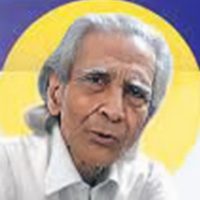
Profile of Humayun Iqbal
Identity: Spy & Historical Novelist, Editor, and Poet
Humayun Iqbal, widely known in the literary world as "H. Iqbal," was born on July 6, 1941, in Rampur, North India. After the partition, his family moved to Karachi, where the environment of books and libraries turned his passion for reading into an obsession.
He was more devoted to books than traditional education. In his youth, he would rent and read novels daily. After reading a poorly written spy novel, he remarked, "I could write better than this," which led to his first novel, Mazloom Lutere. The publisher printed his name as "H. Iqbal," which eventually became his permanent pen name.
During the peak of Ibn-e-Safi’s "Imran Series," Safi fell ill, causing a pause in his publications. Many writers began writing the character of Ali Imran; Humayun Iqbal was among them. However, he stood out due to his sophisticated language, strong plots, and literary dialogues. Out of respect, he stopped writing the Imran Series once Ibn-e-Safi recovered and chose his own creative path.
He created the character "Major Pramod," which later became a dedicated series. While it didn't reach the universal popularity of Imran, it remains a vital reference in Urdu spy fiction.
As an editor, his greatest achievement was launching "Alif Laila Digest." The digest became famous for his thrilling serialized story "Chhalawa," initially published under the female pseudonym "Sabiha Bano." Later, it was revealed that H. Iqbal himself was the author. The digest surpassed a circulation of 50,000 copies, but due to overwork and illness, he had to take a year-long break. Upon his return, the digest couldn't regain its former glory, leading to financial struggles.
To recover, he launched a large-format monthly magazine called "Nayi Naslein." Despite a great start, frequent government bans and the cancellation of its declaration forced it to close. Consequently, he withdrew from publishing and focused solely on writing.
Humayun Iqbal was a versatile personality. Besides spy novels, he had a deep understanding of historical literature, poetry, and music. His book "Abjad-e-Mausiqi" provides simple and practical guidance for music students, establishing him as an authority in the field.
He authored approximately 150 novels, though a complete record was lost due to migrations and life circumstances. He had no children. The death of his wife deeply affected him, and in his final years, he faced illness and financial hardships, yet maintained his creative dignity.
In Urdu spy fiction, it is generally believed that after Ibn-e-Safi, the most prominent names are Mazhar Kaleem and Humayun Iqbal. His writings enchanted millions of readers from the era of rental libraries to the golden age of digests.
Death: He passed away on April 14, 2025, in Karachi.
USEFUL LINKS : | https://ur.wikipedia.org/wiki/%D8%A7%DB%8C%DA%86_%D8%A7%D9%82%D8%A8%D8%A7%D9%84
Tagged Under
join rekhta family!
-
Activities89
Children's Literature1989
-