- Index of Books 180695
-
-
Book Categories
-
Activities89
Children's Literature1989
Drama921 Education347 Essays & Profiles1376 Fiction1655 Health108 History3343Humorous603 Journalism201 Language & Literature1141
Letters724 Life Style30 Medicine974 Movements268 Novel4275 Political349 Religions4769Research & Criticism6695Short-story2671 Sketches237 Social issues111 Sufism / Mystic2014Text Books440 Translation4185-
Book Categories
- Bait Bazi14
- Catalogue / Index4
- Couplets70
- Deewan1254
- Doha50
- Epics99
- Exegesis186
- Geet63
- Ghazal1263
- Haiku11
- Hamd59
- Humorous31
- Intikhab1582
- Keh mukarni6
- Kulliyat571
- Mahiya20
- Majmua4874
- Marsiya386
- Masnavi736
- Musaddas44
- Naat590
- Nazm1209
- Others84
- Paheli14
- Qasida179
- Qawwali16
- Qit'a67
- Quatrain264
- Quintuple15
- Rekhti12
- Remainders16
- Salaam34
- Sehra12
- shahr-Ashob, Hajw, Zatal Nama17
- Tareekh-Goi26
- Translation75
- Wasokht24
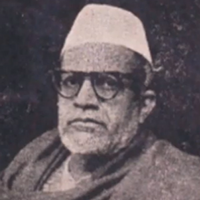
Profile of Imdad Sabri
Identity: Freedom fighter, journalist, writer, and public leader
Maulana Imdad Sabri was among the courageous journalists and political activists of the subcontinent who dedicated their lives to the freedom movement, journalism, social reform, and public rights. He was a true freedom fighter, a fearless journalist, and a seasoned writer.Imdad Sabri was born on 16 October 1914 in the well-known area of Choori Walan, Delhi. He was born into a family renowned for its scholarship. His father, Ashraf Haq Sabri, was a distinguished religious scholar of his time and had close spiritual ties with Haji Imdadullah Muhajir Makki and Rashid Ahmad Gangohi. He combined both names to name his son “Imdad-ur-Rasheed Sabri.”
He received early education in English, studied Persian and Arabic in Saharanpur, and completed his college education from Punjab University in 1930. He passed the Adeeb and Fazil examinations. During imprisonment in 1937, he learned Hindi and developed a deep interest in literature.
From a young age, he had a revolutionary temperament. He considered it his duty to raise his voice against oppression and injustice. At the age of seventeen, he tried to stop a British police officer from assaulting a woman and was severely beaten for it.
Seeing the poor condition of the community, he launched a movement to protect waqf properties and began delivering reformist speeches from the pulpit of Delhi’s Jama Masjid in 1936. As a result, he was arrested in 1937 under Section 107 but was later released on a bail of one thousand rupees.
He contested several elections and won many of them. He also served as Deputy Mayor of the Delhi Corporation. He raised his voice for civic issues, electricity supply, tax relief, grain shops, and public welfare. He actively participated in the 1942 freedom movement and was placed under detention. He was also imprisoned on charges of helping associates of Netaji Subhas Chandra Bose, but he remained steadfast.
Journalism was a major part of his life. He fearlessly wrote about corruption, administrative flaws, and social issues. He worked with or edited around eight newspapers, including Ittehad, Tegh, Chingari, Qaumi Hukumat, Azad Hindustan, Angara, Jamaat, and Awami Rai. His editorials often prompted government action.
He authored dozens of books, notably: History of Urdu Journalism (3 volumes), History of Crime and Punishment, History of the Azad Hind Fauj, With Netaji Subhas Chandra Bose, Freedom Fighter Poets of 1857, Memorable Personalities of Delhi, Ancient Madrasas of Delhi, Mothers and Wives of Political Leaders, Urdu Poets of South Africa, and Spirit of Journalism.
He was also fond of wall journalism (poster journalism). He would write beautiful and impactful posters overnight and have them displayed before dawn. His posters often served as a “writing on the wall” for the public.
His personal life was extremely simple. He was humble, always helping others, and carried a seal and pad with him to sign documents for those in need.
He had deep admiration for Subhas Chandra Bose and remained devoted to national service until his last breath.
Death: He passed away on 13 October 1988 at the age of 74.
USEFUL LINKS : | https://en.wikipedia.org/wiki/Imdad_Sabri
Tagged Under
join rekhta family!
-
Activities89
Children's Literature1989
-