- Index of Books 180729
-
-
Book Categories
-
Activities89
Children's Literature1989
Drama923 Education347 Essays & Profiles1375 Fiction1655 Health108 History3343Humorous603 Journalism201 Language & Literature1140
Letters725 Life Style30 Medicine975 Movements268 Novel4282 Political349 Religions4766Research & Criticism6698Short-story2672 Sketches237 Social issues111 Sufism / Mystic2017Text Books440 Translation4189-
Book Categories
- Bait Bazi14
- Catalogue / Index4
- Couplets70
- Deewan1254
- Doha50
- Epics99
- Exegesis186
- Geet63
- Ghazal1268
- Haiku11
- Hamd60
- Humorous31
- Intikhab1583
- Keh mukarni6
- Kulliyat571
- Mahiya20
- Majmua4880
- Marsiya386
- Masnavi737
- Musaddas44
- Naat591
- Nazm1211
- Others84
- Paheli14
- Qasida179
- Qawwali16
- Qit'a67
- Quatrain264
- Quintuple15
- Rekhti12
- Remainders16
- Salaam34
- Sehra12
- shahr-Ashob, Hajw, Zatal Nama17
- Tareekh-Goi26
- Translation75
- Wasokht24
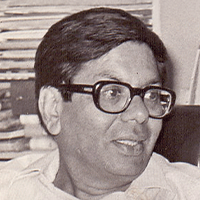
Profile of Khaliq Anjum
Identity: Distinguished Scholar, Ghalib Expert, Textual Critic, Delhi Historian, and Former General Secretary of Anjuman Taraqqi-e-Urdu
Dr. Khaliq Anjum was born on 22 December 1935 in Delhi. His birth name was Ghulam Ahmad, later changed to Khaliq Ahmad, and he eventually became known in literary circles as Khaliq Anjum. His ancestors were Rohilla Pathans, while his maternal family belonged to a scholarly and teaching tradition. His father passed away in his childhood, and his mother, Qaiser Sultana, raised him with remarkable resilience and determination.
He received his early education at Anglo Arabic Higher Secondary School, Delhi, and later pursued higher studies at Aligarh Muslim University and University of Delhi. After completing his M.A. from Delhi University, he earned his PhD under the supervision of Professor Khwaja Ahmad Faruqi with a dissertation on Mirza Mazhar Jan-e-Janan.
Dr. Khaliq Anjum was a multidimensional literary personality. He distinguished himself as a scholar, critic, translator, journalist, sketch writer, and editor. He authored more than sixty books and is regarded as one of the most important figures in Urdu research and textual scholarship.
His most celebrated identity is that of a Ghalib scholar. His contributions to Ghalib studies are of exceptional importance. In particular, his five-volume edited collection of Ghalib’s letters established him among the foremost scholars of Ghalib. He was the first to present Ghalib’s letters in a complete, authenticated, and critically edited form.
His other important works on Ghalib include:
Rare Writings of Ghalib
Ghalib and the Timurids
Ghalib: Selected Essays
Ghalib’s Journey to Calcutta and the Literary Controversy of Calcutta
Selected Letters of Ghalib (Urdu and Hindi)
In the field of research methodology, his book Matni Tanqid (Textual Criticism) is considered a landmark. Through this work, he systematically introduced the principles of textual criticism in Urdu and brought scientific rigor to Urdu textual studies.
Dr. Khaliq Anjum had a deep attachment to Delhi, its culture, history, and monuments. He produced significant scholarly works on the city, including:
Asar-us-Sanadid (edited edition)
Customs of Delhi
Ancient Monuments of Delhi
The Shrine of Shah Mardan, Delhi
Muraqqa-e-Delhi
His sketch collection Mujhe Sab Hai Yaad Zara Zara is an important work of character sketches, portraying notable Urdu literary personalities with insight and elegance.
He also made valuable contributions as a translator. He translated several important Persian and English works into Urdu and authored a notable book on translation studies titled Fan-e-Tarjuma Nigari.
Dr. Khaliq Anjum remained associated with Anjuman Taraqqi-e-Urdu for nearly 37 years, playing a major role in promoting Urdu language and literature through the institution. He also contributed extensively to its journals Urdu Adab and Hamari Zaban.
Dr. Khaliq Anjum remains an authoritative name in the fields of Urdu scholarship, Ghalib studies, textual criticism, and Delhi studies. His academic contributions elevated the standards of Urdu research and enriched Urdu literature with invaluable scholarship.
Death: He passed away on 18 October 2016.
join rekhta family!
-
Activities89
Children's Literature1989
-